7 heavenly virtues vs 7 deadly sins
Each of the seven heavenly virtues is traditionally set against one deadly sin. Here are the seven pairs in order: what each side means, how it shows up in daily life, one small step from the sin toward the virtue, and where the list comes from.
-
Humility vs pride

Humility
HumilitasAn accurate view of yourself. You can be corrected, share credit and ask for help without feeling smaller.
In daily life: admitting a mistake in the same meeting where you made it.
Pride
SuperbiaThe need to stand above others. It shows up as defending your image, brushing off advice and keeping score of status.
In daily life: retelling a mistake so that it belongs to someone else, or assuming you understand the issue better than whoever disagrees.

A step from pride toward humility: the next time you are corrected, repeat the point back in your own words before you reply to it.
-
Charity vs greed

Charity
CaritasGiving time, money or attention freely, without tracking what comes back.
In daily life: paying for something quietly, or giving an unhurried hour to someone who cannot return the favour.
Greed
AvaritiaWanting more than you need and holding on to it. The point called enough keeps moving further away.
In daily life: reaching the figure you once called plenty and naming a higher one the same day.

A step from greed toward charity: decide what would be enough for this month, in money or in time, and give away one thing above that line.
-
Chastity vs lust

Chastity
CastitasDesire that stays inside your commitments and values. It means governing desire, not having none.
In daily life: noticing a strong attraction and leaving it where it is, because of a promise you made.
Lust
LuxuriaDesire that takes over judgement and treats another person as a means to a feeling.
In daily life: chasing someone's attention for the lift it gives you, with no thought for what it means to them.

A step from lust toward chastity: when a craving arrives, name what you actually want from it before you act.
-
Kindness vs envy
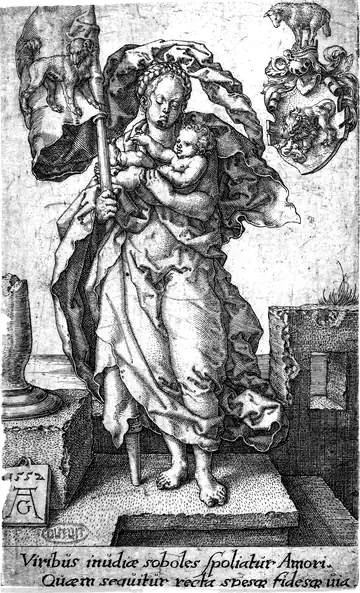
Kindness
HumanitasWishing other people well and acting on it, including when they have what you want.
In daily life: congratulating the colleague who got the job you applied for, and helping them settle in.
Envy
InvidiaResenting someone else's good fortune, or feeling lifted when they stumble.
In daily life: reading a friend's good news and looking for the catch in it.

A step from envy toward kindness: tell the person you envy one specific thing you admire about how they did it.
-
Temperance vs gluttony
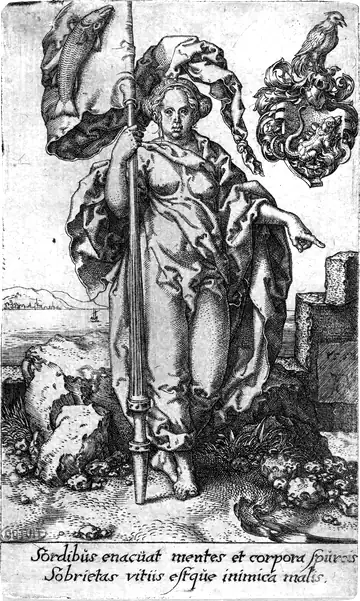
Temperance
TemperantiaEnjoying food, drink, screens and comforts fully, and stopping at enough.
In daily life: one episode, one drink or one helping, enjoyed without bargaining for the next.
Gluttony
GulaCarrying on past the point of enjoyment, whether with food, spending or scrolling.
In daily life: finishing the packet without tasting the second half, or still scrolling an hour after it stopped being fun.

A step from gluttony toward temperance: decide the stopping point before you start, and stop there once this week.
-
Patience vs wrath
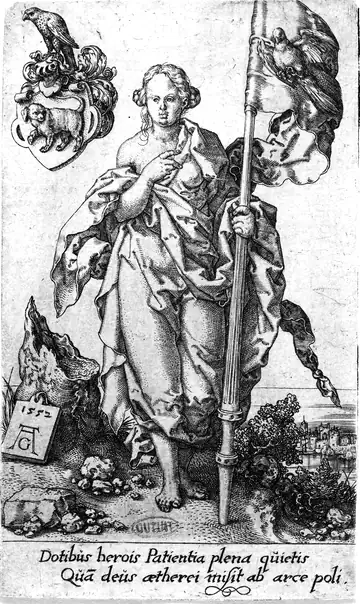
Patience
PatientiaStaying steady under delay and provocation, and choosing when and how to answer.
In daily life: a slow queue that does not get to set your mood, and a sharp message answered the next morning.
Wrath
IraAnger that outruns its cause: snapping, holding a grudge, wanting to get even.
In daily life: a small mistake that earns a raised voice, or an old slight replayed until the perfect reply is ready.

A step from wrath toward patience: hold the reply until you can say in one sentence what you want it to achieve.
-
Diligence vs sloth
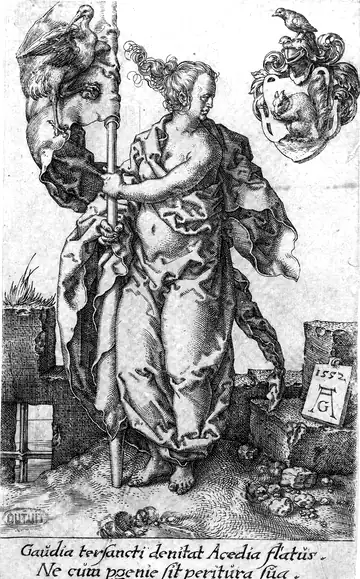
Diligence
IndustriaCareful, sustained effort on what matters, including the dull parts.
In daily life: doing the last tenth of a job, the checking and tidying that nobody will praise.
Sloth
AcediaAvoiding effort and care. In its older sense, acedia is a listlessness that stops caring at all.
In daily life: a project dropped the week it stopped being interesting, or ten small tasks done to avoid the one that matters.

A step from sloth toward diligence: pick the one task that matters most today and finish it before you open anything else.
Which heavenly virtue is the opposite of each deadly sin?
| Heavenly virtue | Deadly sin it answers |
|---|---|
| Humility | Pride |
| Charity | Greed |
| Chastity | Lust |
| Kindness | Envy |
| Temperance | Gluttony |
| Patience | Wrath |
| Diligence | Sloth |
Read from the other side: the opposite of pride is humility, of greed charity, of lust chastity, of envy kindness, of gluttony temperance, of wrath patience and of sloth diligence.
The seven pairs in order
There is no single official order for the seven heavenly virtues or the seven deadly sins. This page follows SALIGIA, a medieval Latin memory word made from the first letters of the sins: superbia (pride), avaritia (greed), luxuria (lust), invidia (envy), gula (gluttony), ira (wrath) and acedia (sloth). Set against them in the same order, the virtues run humility, charity, chastity, kindness, temperance, patience and diligence.
Other orders are in use too. Dante's Purgatorio climbs from pride through envy, wrath, sloth, greed and gluttony to lust, and many modern lists of the virtues start with chastity and end with humility. The order changes from source to source. What the list fixes is which virtue answers which sin.
Where the seven pairs come from
Setting virtues against vices is an old idea. In late antiquity the Latin poet Prudentius wrote the Psychomachia, a poem in which personified virtues meet personified vices in single combat: Chastity against Lust, Patience against Wrath, Humility against Pride. Its exact date is uncertain, and its cast is not identical to the modern seven pairs. See the account of the poem and its characters.
Pope Gregory I later described seven principal vices beneath pride, which he treated as their root. His list included vainglory and melancholy, so it was not exactly the modern seven. Later traditions developed the familiar list and corresponding virtues. This site uses the modern contrary virtues described in the seven capital virtues overview.
Sources for the lists and their history
- Prudentius, Psychomachia: characters and context supports the account of personified battles, and distinguishes its cast from later lists.
- Gregory, Moralia in Job, Book XXXI, paragraph 87 lists the seven vices beneath pride; paragraph 87 is the passage to look for.
- SALIGIA: Latin etymology gives the seven initials behind the order used here.
- Dante's seven terraces gives the different order in Purgatorio.
- Seven capital virtues distinguishes the contrary virtues from the cardinal and theological list.
The daily-life definitions and small steps above are this site's non-religious interpretations for reflection. These historical references do not validate the quiz. Artwork sources are separate, on the plate and font credits page.
How the test uses the pairs
The 7 heavenly virtues test gives each virtue a score from 0 to 100. The 7 deadly sins test scores each sin on the same scale. Put the two results together and each pair is drawn as two bars growing from one centre line, so you can see where a virtue has settled a sin and where both run strong. The exact rules are on the method page.
The engravings
The plates on this page are by Heinrich Aldegrever, a German engraver who worked in Soest. In 1552 he made two matching sets of seven prints, The Virtues and The Vices. Each print shows one allegorical figure with a Latin couplet beneath. The virtues stand, each holding a banner. The vices ride: Pride on a horse, Gluttony on a boar, Sloth on a donkey.
The pairing is written into the prints themselves. The couplet under Pride calls it the mother and wellspring of every evil, and the one under Modesty says the humble mind treads pride underfoot.
Museum catalogues title four of them differently from the modern list: Modesty for humility, Compassion for kindness, Avarice for greed and Idleness for sloth. Sources are on the credits page.
Questions about the seven pairs
Is this the same as the cardinal and theological virtues?
No. That is a second list of seven: the four cardinal virtues of prudence, justice, fortitude and temperance, and the three theological virtues of faith, hope and charity. Temperance and charity appear on both lists, and some sources give the name seven heavenly virtues to that second list instead. The list on this page is the one built to answer the deadly sins one by one. It is also called the capital, contrary or remedial virtues.
Are the 7 heavenly virtues in the Bible?
Not as a list. Humility, patience, charity and the others are each praised in the Bible, but neither the seven virtues that answer the sins nor the seven deadly sins appear there as a set. Both lists were put together by later writers.
Which deadly sin is the worst, and which virtue answers it?
Tradition gives first place among the sins to pride. Pope Gregory I treated it as the queen of all the vices, and the couplet under Aldegrever's Pride calls it the mother and wellspring of every evil. The virtue that answers it is humility. This site does not rank the pairs: each one is scored on its own.
Can a virtue and its sin both be strong in the same person?
Yes. The two quizzes score their statements separately, so a high score on one does not force a low score on the other. Contested is this site's editorial label for a pair where both scores are at least 8 out of 12. These self-reports cannot show that one trait causes, strengthens or cancels the other.
See where you stand on all seven pairs. Both tests take about three minutes and use the same scale.